
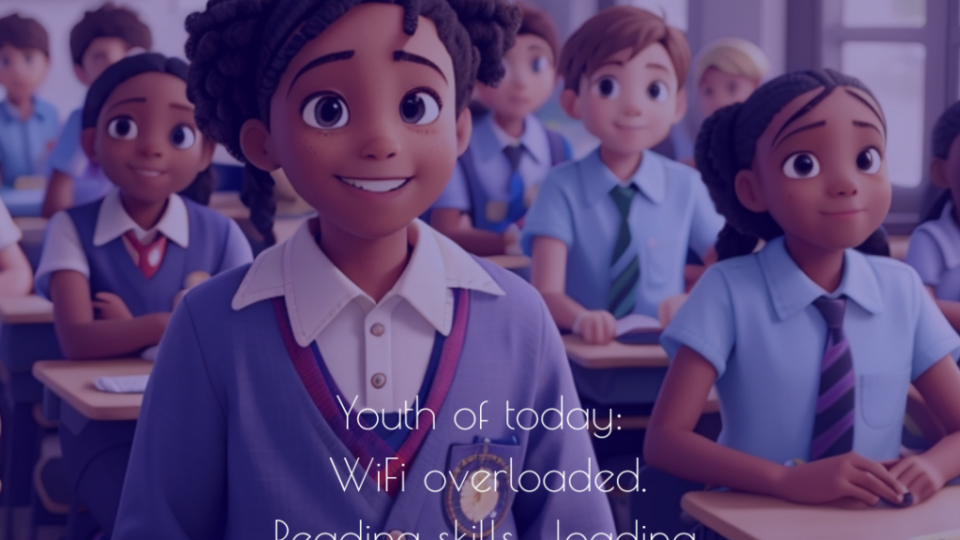
Youth Potential Depends on Reading Resilience
Youth Day honours courage and future possibility.
But potential without resilience is fragile.
One of the strongest predictors of long-term academic resilience is reading fluency by the intermediate phase. International and South African research consistently shows that learners who are not reading for meaning by Grade 4 are significantly more likely to struggle across subjects in later grades.
The risk is cumulative.
When reading remains effortful:
-
Content comprehension weakens.
-
Academic self-concept declines.
-
Avoidance behaviour increases.
-
Dropout risk rises in senior phases.
The World Bank has linked foundational literacy deficits to long-term economic exclusion. At school level, this manifests as disengagement during the Grade 7–9 transition period — a phase where abstract thinking increases and reading demands intensify.
Operationally, this means:
-
Increased academic support in higher grades.
-
Greater emotional support requirements.
-
Curriculum compression pressure.
-
Performance volatility in assessment years.
Resilience is not built in Grade 10. It is built in Foundation and Intermediate Phases.
Future-ready schools invest early in structured literacy systems that:
-
Build fluency automatically.
-
Strengthen comprehension depth.
-
Provide measurable growth data.
-
Reduce long-term academic instability.
Youth empowerment is not symbolic.
It is structural.
Strong readers become resilient learners.
Resilient learners remain engaged.
The future is here. The question is whether resilience is being built now.


Comments
Comments are closed.